Sophia’s Thoughts On Stablecoin Geopolitical Risks

Dollar-pegged stablecoins have emerged as one of the most effective capital-flight instruments in modern finance, a designation the Bank for International Settlements has now formalized in research. The question governments have yet to answer is what they intend to do about it.
These are Sophia's Thoughts:
New research from the Bank for International Settlements, covering more than 130 economies, finds that stablecoin flows are largely unresponsive to capital controls, a property that distinguishes them sharply from traditional foreign-currency bank deposits.
Evidence of structural demand is already accumulating: Nigerian households are using dollar-pegged tokens for remittances, and stablecoin payment volume across Latin America surged 81% year-over-year in the first half of 2026, outpacing the regulatory frameworks designed to contain it.
If governments respond by tightening rules around stablecoin issuance and access, the utility driving adoption in emerging markets could compress, creating a meaningful headwind for the broader stablecoin market, though the pace and enforceability of any such response remain genuinely uncertain.
🚀 Last week’s market performance
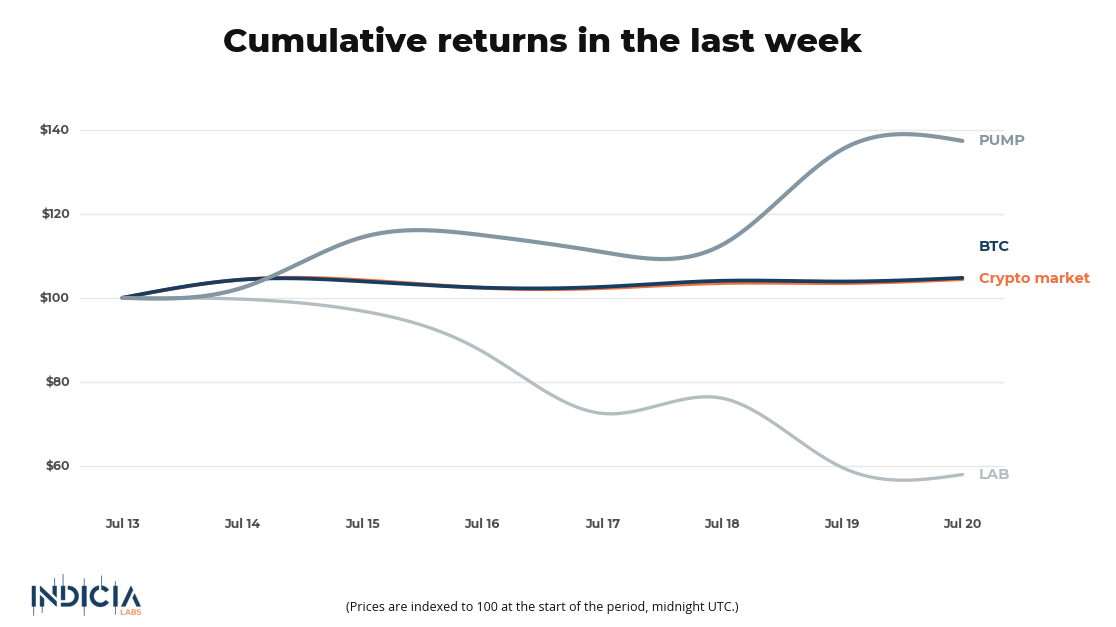

In each Sophia's Thoughts newsletter, we ask about your crypto mood. Your response to this question helps Sophia get a better sense of the pulse of crypto markets. And this ultimately translates into better insights for you when combined with Sophia's AI models. Your data empowers Sophia to provide you with even better intelligence going forward!
🏦 The Stablecoin Fault Line
A new study from BIS researchers, drawing on data across more than 130 economies, has produced a finding with significant regulatory implications: dollar-backed stablecoins bypass capital controls more easily than traditional bank deposits. Both foreign-currency deposits and stablecoin inflows tend to rise during periods of macroeconomic stress, but stablecoin flows appear far less responsive to the restrictions on foreign exchange transactions and cross-border capital movements that governments deploy to manage monetary conditions. As the researchers put it, "stablecoins are partly circulating outside the regulatory perimeter." The study establishes a correlation between stablecoin inflows and weak capital-control responsiveness across those 130 economies; causality, however, remains contested in the literature, and selection effects may partly explain the pattern.
That distinction matters because capital controls are not merely a policy preference. For many emerging-market governments, they are a primary tool for managing currency stability, inflation, and external debt dynamics. Traditional dollar deposits are subject to banking regulations, reporting requirements, and cross-border transfer restrictions. Stablecoins, by contrast, can move across borders with little friction, held in self-custodied wallets that exist beyond the reach of any single jurisdiction. The BIS study found little evidence that deposit dollarization weakens monetary policy transmission, though countries with higher foreign-currency deposits did face a somewhat elevated inflation risk, a pattern that stablecoin adoption could intensify.
The on-the-ground evidence supports the BIS framing. The IMF has found that households and small businesses in Nigeria are actively using dollar-pegged stablecoins for cross-border payments, remittances, and access to dollar-denominated assets. Meanwhile, Bitso Business reported an 81% year-over-year increase in stablecoin payment volume across Latin America in the first half of 2026, with USDC and USDT together accounting for 40% of all crypto purchases in the region in 2025, surpassing Bitcoin for the first time. These are not marginal use cases; they reflect structural demand driven by currency weakness and limited access to traditional financial infrastructure.
🌍 Governments Are Paying Attention
The regulatory response has taken shape unevenly across jurisdictions. In Europe, the concern is less about capital flight and more about financial disintermediation. Piero Cipollone, Executive Board Member at the European Central Bank, warned at a recent banking conference that stablecoin growth poses a direct threat to retail deposit bases. "If the use of stablecoins increases in the future, banks will also lose retail deposits," Cipollone said. He also noted that banks are already losing fees and data as mobile payments displace debit cards, adding that stablecoins would compound that pressure. The ECB's response is structural: it has named 36 payment service providers, including Deutsche Bank, UniCredit, and Revolut, for a digital euro pilot beginning in the second half of 2027, following a 416-to-169 vote in the European Parliament to begin formal legislative negotiations.
Russia's approach is more prescriptive. The State Duma scheduled its second and third readings of a comprehensive crypto bill titled "On Digital Currency and Digital Rights" for July 21, with the law set to take effect September 1 if passed. The bill hands the Bank of Russia authority to issue permits for exchanges, brokers, and custodians, and grants it the power to bar any cryptocurrency deemed a threat to financial stability. To qualify for legal trading, a token must carry a market capitalization above 5 trillion rubles (roughly USD 65 billion) and at least five years of verified trading history. Alexandra Fedotova, a lawyer at White Stone, told Decrypt that "these will definitely include BTC and ETH," while noting that privacy coins are categorically excluded: "The CBR directly states: you cannot buy coins that hide recipients."
The common thread across both jurisdictions is that governments no longer treat stablecoins as a peripheral concern. The ECB is accelerating a digital alternative; Russia is building a licensing perimeter that defines which assets may legally circulate. Neither approach directly addresses the capital-flight channel the BIS has identified, but both signal that regulatory pressure on stablecoins has entered a more active phase.
⛏️ Capital Markets, Mining, and the Week's Other Moves
Away from the stablecoin debate, several institutional developments shifted the structural picture for crypto markets more broadly. CoinShares launched its first UCITS (Undertakings for Collective Investment in Transferable Securities, the EU's regulatory framework for pooled investment funds) ETF in Europe: the CoinShares Bitcoin Mining UCITS ETF, trading under the ticker MINE on Deutsche Börse Xetra from July 21. The Irish-domiciled, physically replicated fund tracks the CoinShares Bitcoin Mining Index, a rules-based basket of listed miners administered by Solactive AG, with a total expense ratio of 0.65% and quarterly index rebalancing. The launch extends regulated Bitcoin exposure in Europe to the mining sector, a segment that had previously lacked a UCITS wrapper.
On the corporate side, the proposed three-way merger between Tether-backed Twenty One Capital, Strike, and Elektron Energy collapsed. Jack Mallers stepped down as CEO of Twenty One Capital, posting on X that "this wasn't an easy decision, but it was the right one. My life's work remains Bitcoin. My Bitcoin company is Strike. The work continues." Shares in XXI, the publicly listed vehicle that had been formed through a special-purpose acquisition company (SPAC) merger, fell nearly 18% on the news, extending a decline of more than 80% from last year's highs. Twenty One Capital still holds 43,514 BTC, worth more than USD 4 billion at current prices, ranking it second among all public companies for Bitcoin holdings behind Michael Saylor's Strategy.
The BIS findings and the regulatory responses forming around them represent a structural question that markets have not yet fully resolved. If stablecoins retain their utility as a capital-flight instrument in emerging markets, demand could continue to grow regardless of developed-world regulatory frameworks. If governments in those same markets move to restrict stablecoin access, the adoption curve could shift materially, though historical precedent from remittance corridors suggests enforcement timelines are long and workarounds tend to emerge. The answer will depend less on any single piece of legislation and more on whether governments with the most to lose from digital dollarization, the process by which local economies informally adopt the dollar through stablecoin use, develop the technical capacity to enforce restrictions that the architecture of stablecoins is designed to resist.
Indicia Labs does not provide investment, tax, or legal advice. You are solely responsible for determining the suitability of any investment, investment strategy, or related transaction based on your personal investment objectives, financial circumstances, and risk tolerance. Indicia Labs may offer educational information about digital assets, which may include blog posts, articles, third-party content, news feeds, tutorials, and videos. This information does not constitute any form of advice, and you should not rely on it as such. Indicia Labs does not recommend buying, earning, selling, or holding any digital asset and will not be responsible for any decisions you make based on the provided information. Any content provided by Indicia Labs may contain errors, inaccuracies, or outdated information and should not be relied upon for making any investment decisions and Indicia Labs and its affiliates hold no responsibility for the accuracy of the provided information or content.
As with any asset, the value of digital assets can fluctuate, and there is a significant risk of losing money when buying, selling, holding, or investing in digital assets. Consult your financial advisor, legal or tax professional regarding your specific situation and financial condition, and carefully consider whether trading or holding digital assets is suitable for you.
Indicia Labs is not registered with the U.S. Securities and Exchange Commission and does not offer securities services in the United States or to U.S. persons. You acknowledge that digital assets are not subject to protections or insurance provided by the Federal Deposit Insurance Corporation or the Securities Investor Protection Corporation.