Sophia’s Thoughts On Global Payments Expansion

Mastercard's USD 1.8 billion acquisition of stablecoin infrastructure firm BVNK marks a turning point for crypto's role in global payments. The question is no longer whether legacy finance will engage with stablecoins, but how quickly that infrastructure becomes central to how money actually moves.
These are Sophia's Thoughts:
Mastercard's agreement to acquire BVNK for up to USD 1.8 billion, including USD 300 million in contingent payments, signals that the largest payment networks are moving from tokenization experiments into full stablecoin infrastructure ownership.
The deal targets cross-border commerce specifically, where stablecoins offer speed and programmability advantages that existing card rails cannot replicate, positioning digital assets as core settlement layers rather than speculative instruments.
With Ripple expanding in Brazil, Vietnam formalizing a crypto exchange pilot, and Citigroup revising its price targets downward, the macro and regulatory environment remains mixed, leaving the pace of institutional adoption dependent on legislative progress in the United States.
🚀 Last week’s market performance
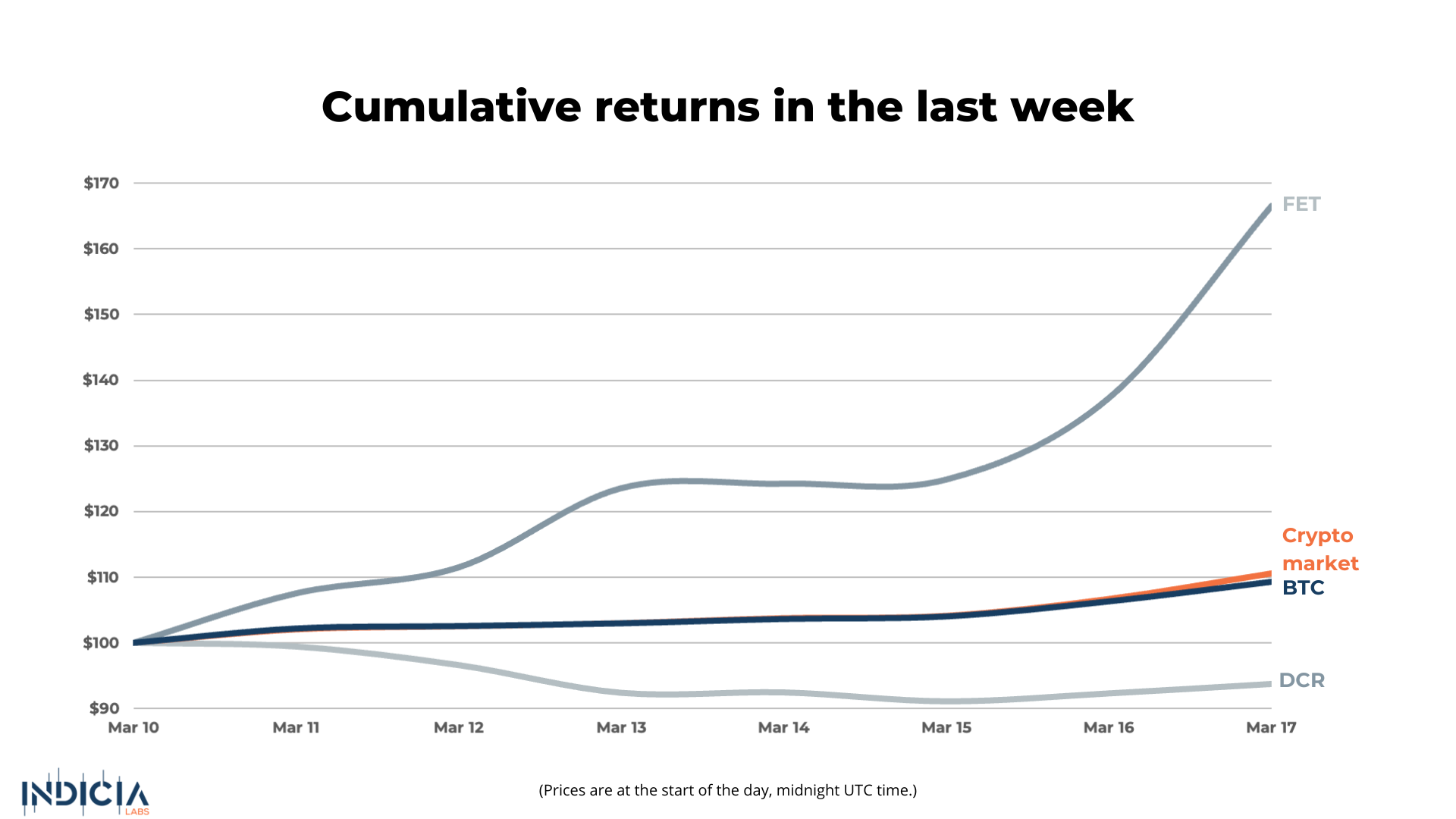
This week, the broader crypto market rose 10.5%, with Bitcoin (BTC) gaining 9.3% as markets staged their strongest weekly rally since September 2025. FET was the standout performer, surging 66.5% following the launch of their beta, while Decred (DCR) led declines, dropping 6.2%.
🧐 What is your crypto mood today?

In each Sophia's Thoughts newsletter, we ask about your crypto mood. Your response to this question helps Sophia get a better sense of the pulse of crypto markets. And this ultimately translates into better insights for you when combined with Sophia's AI models. Your data empowers Sophia to provide you with even better intelligence going forward!
💳 Mastercard Goes All-In on Stablecoins
Mastercard's acquisition of BVNK for up to USD 1.8 billion represents one of the most significant traditional finance moves into stablecoin infrastructure to date, according to deal coverage by CoinDesk and Decrypt. BVNK, founded in 2021 and valued at USD 750 million following a USD 50 million Series B in 2024, processes USD 30 billion annually across more than 130 countries. Coinbase had previously explored acquiring BVNK in a proposed USD 2 billion deal before both parties walked away at the due diligence stage in November 2025, underscoring how competitive interest in this infrastructure segment has become. The transaction is expected to close before the end of 2026, per CoinDesk.
The strategic rationale is explicit. Jorn Lambert, Mastercard's Chief Product Officer, stated that "adding on-chain rails to our network will support speed and programmability for virtually every type of transaction," and that the company expects "most financial institutions and fintechs will in time provide digital currency services, be it with stablecoins or tokenized deposits." On-chain rails refer to payment infrastructure built directly on blockchain networks, enabling transactions to settle in seconds with embedded logic, rather than routing through the correspondent banking system. As Decrypt reported, Mastercard processes approximately USD 9.5 trillion in annual payments volume across 210 countries, meaning even a partial migration of cross-border flows onto stablecoin rails would represent a structural shift in how value moves globally. William Blair, in a research note cited by CoinDesk, framed the deal as "further affirmation of the stablecoin market for cross-border commerce, rather than B2C payments, which are well served by card."
The longer-term signal may be more important than the deal itself. As Decrypt reported, billionaire investor Stanley Druckenmiller said in an interview with Morgan Stanley that "our whole payment systems will be stablecoins in 10 or 15 years." Whether that thesis proves accurate remains to be seen, but if correct, Mastercard's acquisition of BVNK would represent a core infrastructure investment rather than a hedge. The broader implication is that stablecoin adoption may accelerate through enterprise distribution rather than retail crypto channels, though any meaningful impact will depend on execution and likely take 18 to 36 months to materialize.
🌎 Traditional Finance Moves on Every Front
The Mastercard deal does not stand alone. Ripple is expanding aggressively in Brazil, applying for a Virtual Asset Service Provider license, a regulatory designation that permits companies to offer crypto-related financial services under central bank supervision, with the Central Bank of Brazil, and rolling out an integrated platform for banks and fintechs covering cross-border payments, custody, brokerage, and treasury tools. Monica Long, President at Ripple, described Latin America as "always a priority market," citing Brazil's "advanced and forward-thinking financial ecosystem." Banco Genial already uses Ripple's network for same-day U.S. dollar transfers, while Braza Bank issued a real-backed stablecoin on the XRP Ledger. Ripple's recent acquisitions of prime brokerage Hidden Road for USD 1.25 billion and corporate treasury business GTreasury for USD 1 billion indicate a company building integrated infrastructure across the full financial services stack.
Meanwhile, Vietnam is formalizing a pilot program for domestic crypto exchanges, with five companies cleared for initial screening, including affiliates of Techcombank, VPBank, and LPBank. Vietnam ranked fourth in Chainalysis' Global Crypto Adoption Index, confirming the pilot carries material domestic significance. The government's simultaneous push to restrict trading on foreign platforms signals a preference for regulated domestic infrastructure over uncontrolled offshore exposure, a pattern that mirrors regulatory developments in Brazil and across the European Union.
Taken together, these moves point to traditional financial institutions arriving at the same conclusion: stablecoin infrastructure is worth owning outright, not merely partnering with. The question now is whether the pace of acquisition activity outruns the regulatory frameworks designed to govern it.
📉 The Macro Backdrop Remains Complicated
Despite the bullish signals from institutional deal flow, Citigroup trimmed its 12-month Bitcoin price target to USD 112,000 from USD 143,000, and its Ethereum target to USD 3,175 from USD 4,304, citing slower U.S. legislative momentum and reduced ETF inflow expectations. Alex Saunders, analyst at Citigroup, noted in a Monday report that "ETF demand where we reduce the assumption to $10 billion BTC and $2.5 billion (ETH) is still the most important positive factor." That framing underscores how central ETF flows remain to near-term price formation and suggests Citi's revision reflects execution risk around legislation and product flows rather than a wholesale rejection of the adoption thesis.
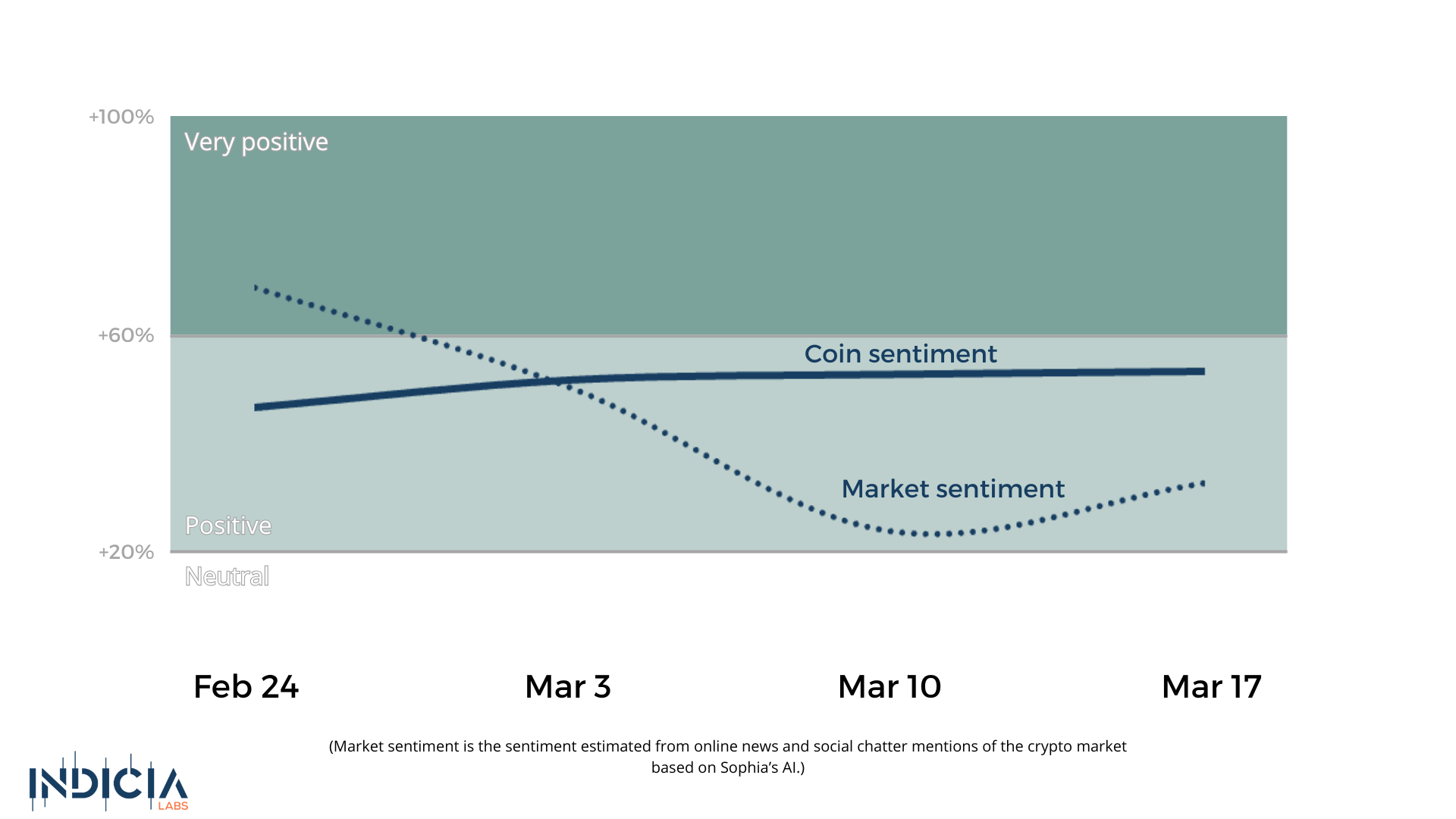
Bitcoin was trading around USD 74,000 at the time of publication, having briefly touched USD 75,912 before pulling back, according to CoinDesk markets coverage. Coin sentiment has remained steady near the positive range, while market sentiment appears to have bottomed last week and is now climbing away from neutral, showing early signs of recovery.
On the ETF front, Mark Pilipczuk, analyst at CF Benchmarks, noted in an email that "spot bitcoin ETFs drew roughly $767 million in net inflows last week, the third consecutive week of positive flows and a sharp reversal from the five-week, $3 billion-plus outflow streak earlier in the year." That reversal supports the base case for continued institutional accumulation, but Citi's revised assumptions indicate analysts are not yet willing to extrapolate the trend aggressively. Overall, the markets appear to be recovering, but a lot of uncertainty remains.
Indicia Labs does not provide investment, tax, or legal advice. You are solely responsible for determining the suitability of any investment, investment strategy, or related transaction based on your personal investment objectives, financial circumstances, and risk tolerance. Indicia Labs may offer educational information about digital assets, which may include blog posts, articles, third-party content, news feeds, tutorials, and videos. This information does not constitute any form of advice, and you should not rely on it as such. Indicia Labs does not recommend buying, earning, selling, or holding any digital asset and will not be responsible for any decisions you make based on the provided information. Any content provided by Indicia Labs may contain errors, inaccuracies, or outdated information and should not be relied upon for making any investment decisions and Indicia Labs and its affiliates hold no responsibility for the accuracy of the provided information or content.
As with any asset, the value of digital assets can fluctuate, and there is a significant risk of losing money when buying, selling, holding, or investing in digital assets. Consult your financial advisor, legal or tax professional regarding your specific situation and financial condition, and carefully consider whether trading or holding digital assets is suitable for you.
Indicia Labs is not registered with the U.S. Securities and Exchange Commission and does not offer securities services in the United States or to U.S. persons. You acknowledge that digital assets are not subject to protections or insurance provided by the Federal Deposit Insurance Corporation or the Securities Investor Protection Corporation.