Sophia’s Thoughts On Tariff Legal Troubles

Policy shifted overnight as the legal basis for tariffs changed while the effective rates barely moved, yet market confidence dropped sharply because the outlook became far less predictable.
These are Sophia's Thoughts:
The Supreme Court struck down the tariffs, yet within hours they were replaced under a new law, leaving businesses facing the same costs but far less certainty.
Bitcoin fell alongside risk assets while gold rose, showing investors were reducing exposure to uncertainty rather than hedging inflation.
Markets are reacting not to tariff levels but to a rolling cycle of temporary rules that makes the economic outlook difficult to price.
🚀 Last week’s market performance
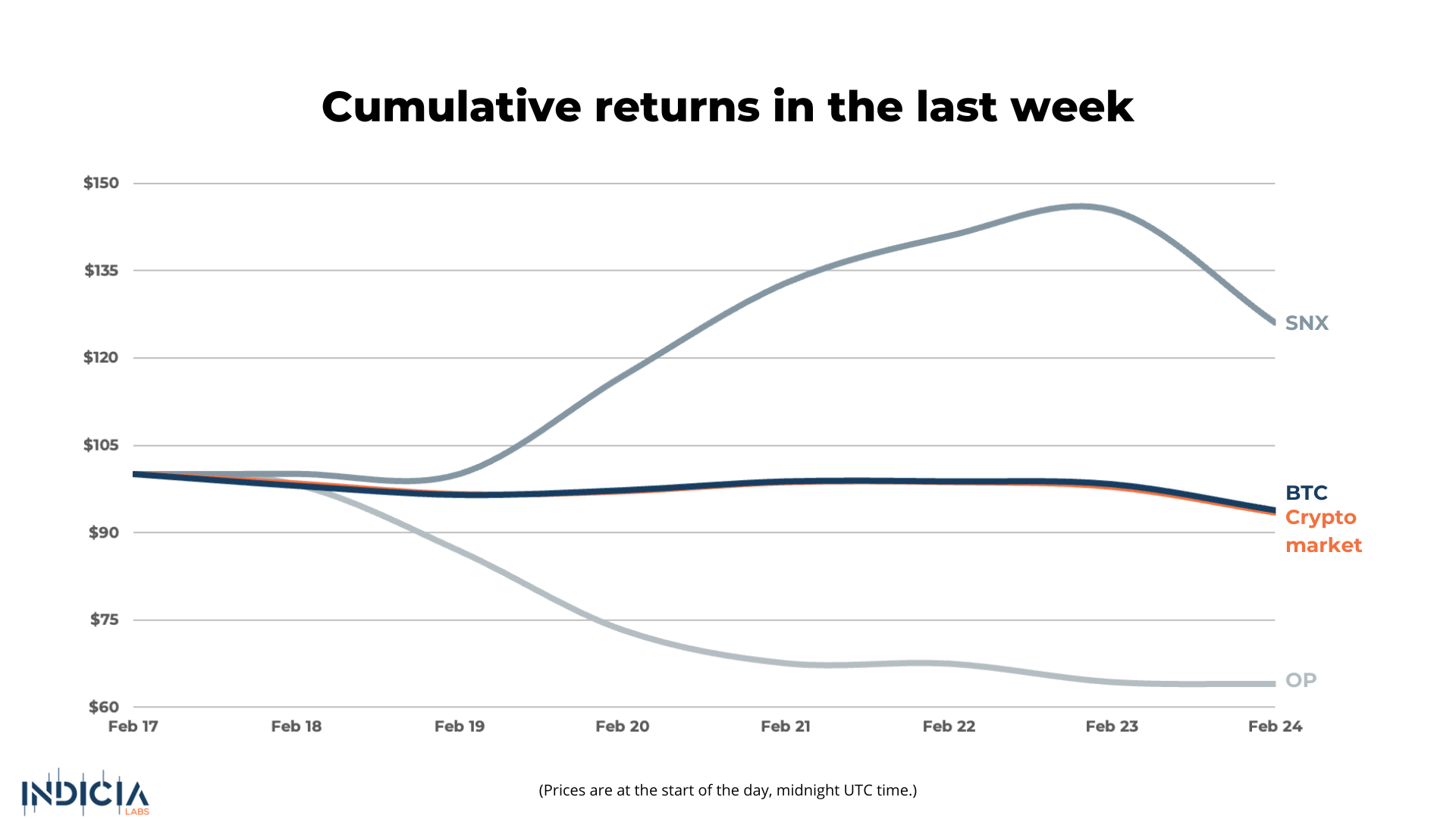
This week, the broader crypto market declined 6.5%, with Bitcoin (BTC) falling 6.1% as risk appetite weakened. Synthetix (SNX) stood out, rallying 26.1%, while Optimism (OP) underperformed sharply, dropping 36.0% after Coinbase moved away from using its stack.
🧐 What is your crypto mood today?

In each Sophia's Thoughts newsletter, we ask about your crypto mood. Your response to this question helps Sophia get a better sense of the pulse of crypto markets. And this ultimately translates into better insights for you when combined with Sophia's AI models. Your data empowers Sophia to provide you with even better intelligence going forward!
📃 Tariffs Went Away, Then Came Back
You might have thought tariffs were old news, markets did too. For months, the Supreme Court had been reviewing whether the administration’s “Liberation Day” tariffs, imposed under the International Emergency Economic Powers Act (IEEPA), were lawful. That law is meant for national emergencies, not long-term trade policy, and courts questioned whether it was being stretched beyond its intended use. Those tariffs generated roughly USD 133B in revenue, about half of total collections, meaning a large portion of U.S. trade policy suddenly depended on a legal technicality.
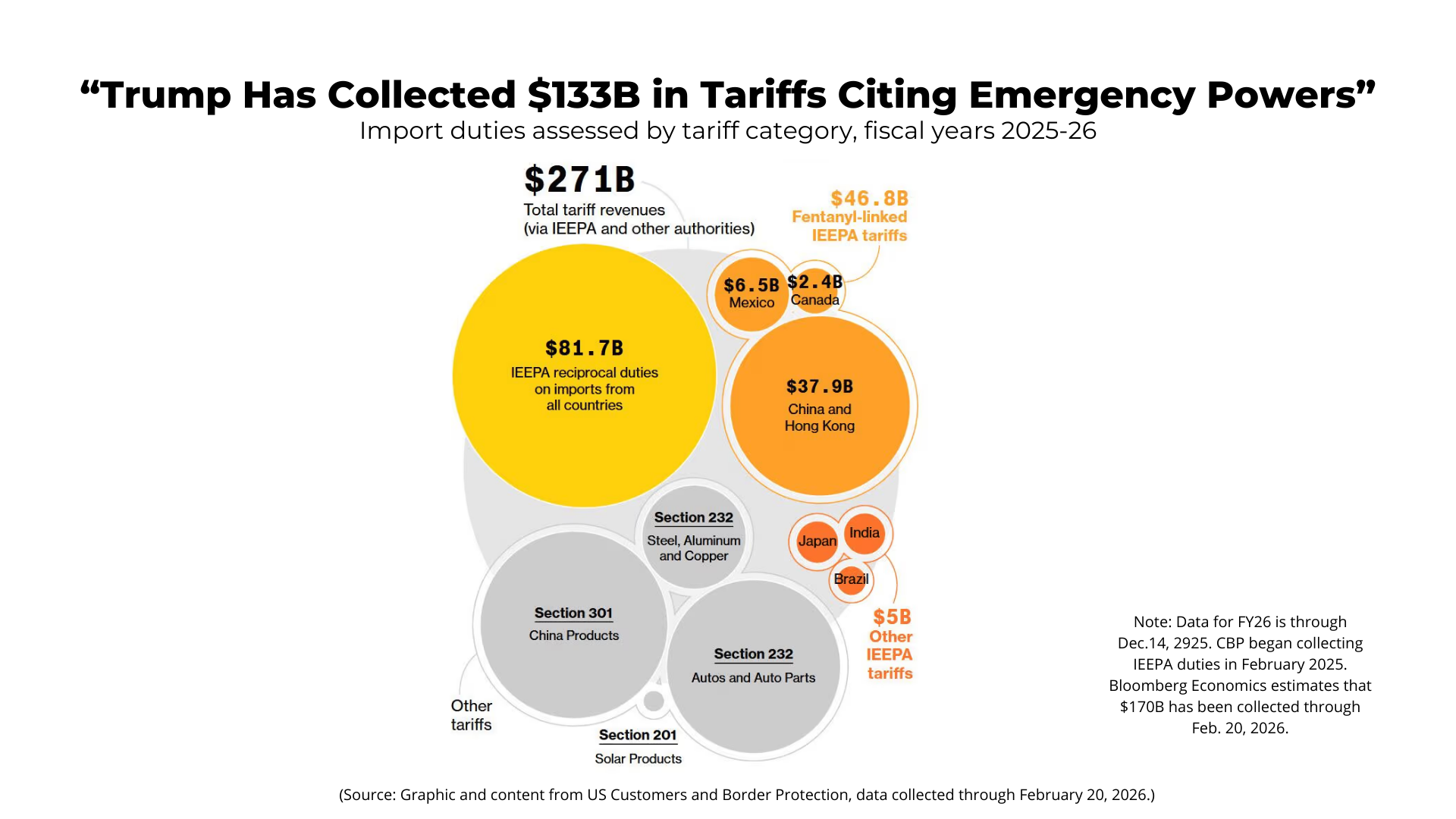
On Friday, the Court struck them down. But the policy didn’t disappear. Within hours, the White House replaced them with a 10% global tariff under Section 122 of the 1974 Trade Act, while signaling the rate could rise to 15%. Section 122 allows temporary tariffs for balance-of-payments issues, giving the administration short-term authority while it prepares longer-term trade actions. The legal authority changed, not the economic outcome. The effective tariff rate only moved from roughly 13.6% to about 12%.
This is why markets didn’t celebrate the ruling. The economic burden on trade barely moved, only the legal justification did. Section 122 expires after roughly 150 days, meaning tariffs may need to be replaced again under a different law. As Deutsche Bank noted, “Section 122 was designed as a temporary tool to address emergency balance of payments issues and would likely face further legal challenges if rolled over repeatedly.”
Instead of removing tariffs, the ruling introduced a cycle of temporary measures, legal challenges, and replacement policies. Businesses now don’t know whether tariffs will be 10%, 15%, or replaced entirely in a few months. Even global companies are struggling to plan around it. One airline executive summarized the environment bluntly: the uncertainty is “harder to deal with than war.” The tariff rate changed slightly while the predictability of trade policy changed entirely.
🥇 Crypto Didn’t Behave Like Digital Gold
Markets responded immediately, but not in the way many expected. Bitcoin fell below USD 65,000 and crypto equities declined alongside it. Normally tariffs are inflationary, which should support scarce assets. Instead, gold rose while Bitcoin fell, revealing that investors weren’t hedging inflation rather they were reducing exposure.
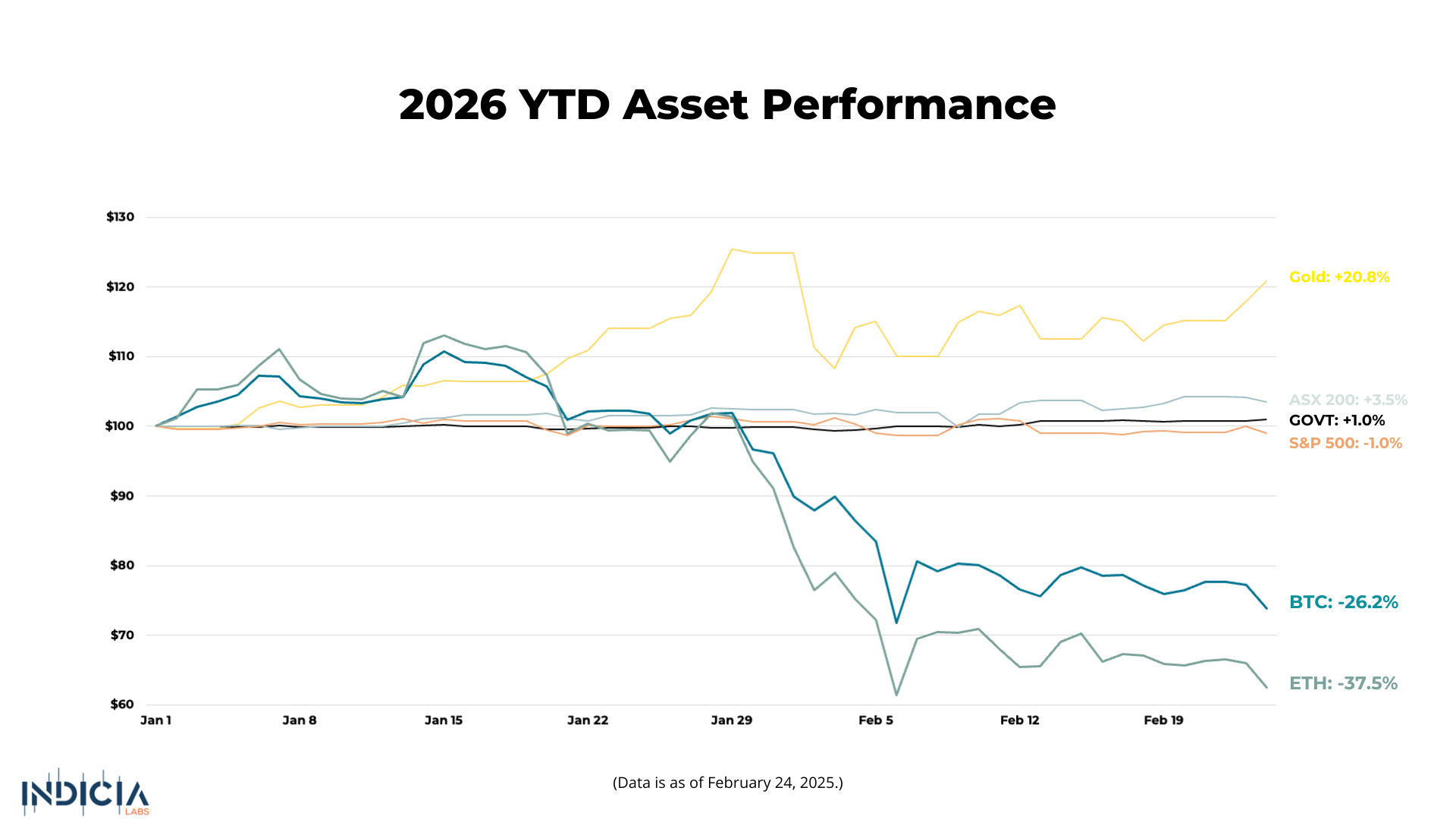
Barron’s captured the shift directly: “Bitcoin seems to be diverging from traditional haven assets. It may soon be forced to drop its ‘digital gold’ moniker altogether.” The reason is that tariffs don’t just increase prices; they reduce economic activity. Less trade means weaker confidence and tighter financial conditions. Liquidity-sensitive assets react first, and crypto remains one of the most liquidity-dependent markets.
As BTSE’s COO Jeff Mei explained, “The sudden uptick in tariff rates is causing investors to sell crypto assets in anticipation of a more serious market decline.” This episode reinforced an important point: Bitcoin currently trades less like a long-term inflation hedge and more like a real-time gauge of global risk appetite. When macro policy becomes unpredictable, investors reduce speculative exposure before they hedge purchasing power.
⁉️ The Real Story Is Policy Uncertainty
The tariffs themselves are not a macro shock, but there are unresolved consequences. First is the refund risk. Courts may require the government to return some of the USD 133B collected under the invalidated tariffs. Justice Kavanaugh warned the process is likely to be a “mess.” If corporations receive those refunds, it effectively becomes an unplanned fiscal stimulus, money injected back into the economy without new legislation.
Second is escalation risk. Section 122 lasts only about 150 days and may transition to broader Section 301 tariffs, which historically have no upper limit and tend to persist once implemented. Third is negotiation risk. Trade partners may suspend or renegotiate agreements while waiting for clarity, prolonging uncertainty across global markets.
Economists estimate the stakes are meaningful. Goldman Sachs calculates additional tariff increases could “boost core PCE inflation by 0.5pp and reduce 2026 GDP growth by 0.4pp.” Yet markets are reacting less to those numbers than to the moving target itself.
Tariffs didn’t suddenly tighten financial conditions, unpredictability did. Crypto isn’t responding like an inflation hedge and until policy stabilizes, it seems macro volatility will dominate fundamentals.
Indicia Labs does not provide investment, tax, or legal advice. You are solely responsible for determining the suitability of any investment, investment strategy, or related transaction based on your personal investment objectives, financial circumstances, and risk tolerance. Indicia Labs may offer educational information about digital assets, which may include blog posts, articles, third-party content, news feeds, tutorials, and videos. This information does not constitute any form of advice, and you should not rely on it as such. Indicia Labs does not recommend buying, earning, selling, or holding any digital asset and will not be responsible for any decisions you make based on the provided information. Any content provided by Indicia Labs may contain errors, inaccuracies, or outdated information and should not be relied upon for making any investment decisions and Indicia Labs and its affiliates hold no responsibility for the accuracy of the provided information or content.
As with any asset, the value of digital assets can fluctuate, and there is a significant risk of losing money when buying, selling, holding, or investing in digital assets. Consult your financial advisor, legal or tax professional regarding your specific situation and financial condition, and carefully consider whether trading or holding digital assets is suitable for you.
Indicia Labs is not registered with the U.S. Securities and Exchange Commission and does not offer securities services in the United States or to U.S. persons. You acknowledge that digital assets are not subject to protections or insurance provided by the Federal Deposit Insurance Corporation or the Securities Investor Protection Corporation.