Sophia’s Thoughts On The Middle East Conflict

War in the Middle East has jolted energy markets, pressured equities, and put Bitcoin’s macro identity to another real world stress test.
These are Sophia's Thoughts:
Oil is the transmission channel, with disruption around the Strait of Hormuz pushing crude higher and reintroducing inflation risk just as global growth expectations were stabilizing.
Bitcoin is neither collapsing nor convincingly rallying, reflecting a market still unsure whether to treat it as a high beta liquidity asset or an emerging macro hedge.
The next move for crypto hinges on whether energy driven inflation tightens financial conditions further or forces a policy response that ultimately restores liquidity.
🚀 Last week’s market performance
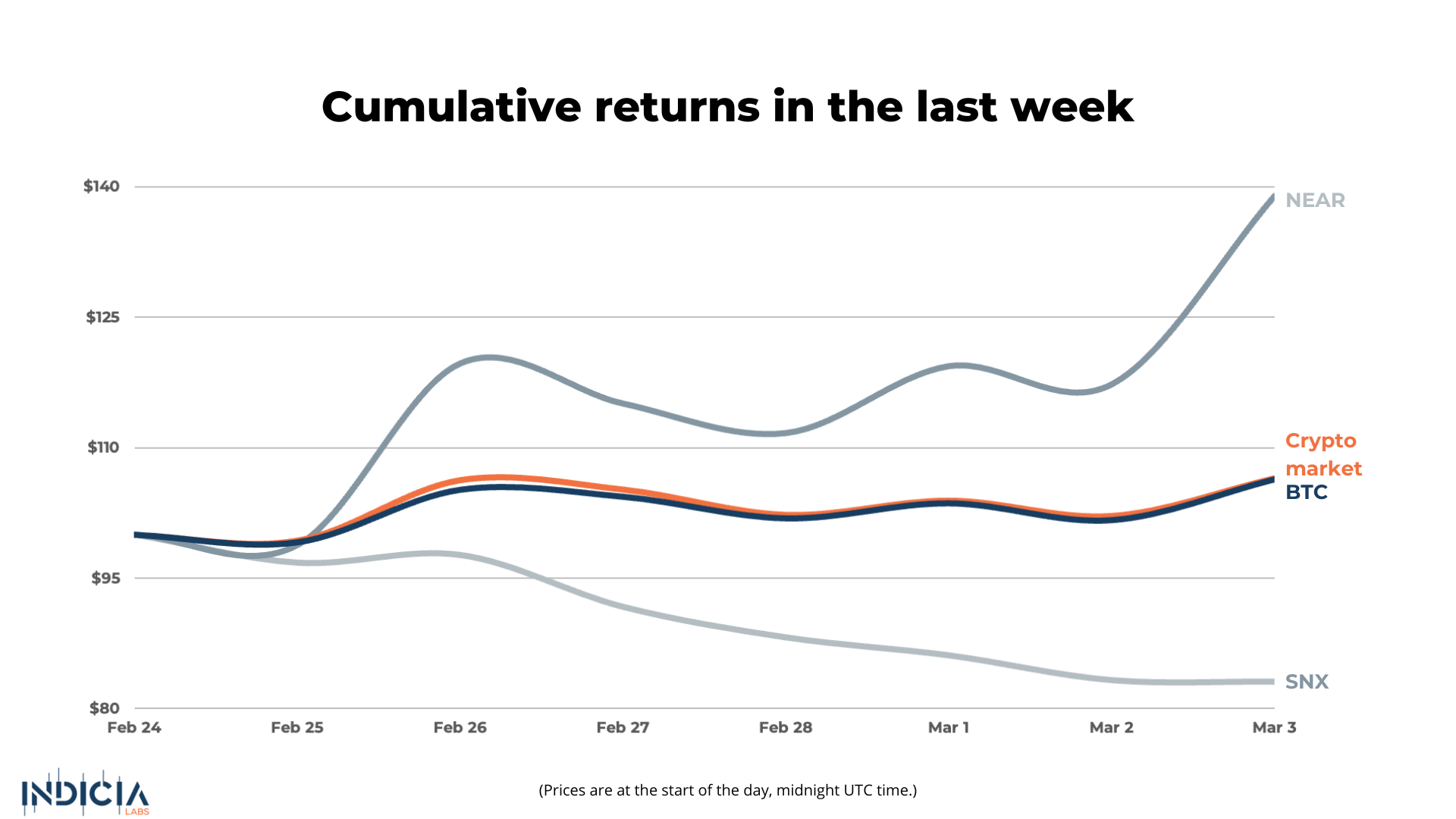
This week, the broader crypto market gained 6.5%, with Bitcoin (BTC) rising 6.4% as risk appetite stabilized despite ongoing geopolitical tension. NEAR (NEAR) led the move higher, rallying 38.9%, while Synthetix (SNX) underperformed sharply, declining 16.9% amid continued volatility in altcoins.
🧐 What is your crypto mood today?

In each Sophia's Thoughts newsletter, we ask about your crypto mood. Your response to this question helps Sophia get a better sense of the pulse of crypto markets. And this ultimately translates into better insights for you when combined with Sophia's AI models. Your data empowers Sophia to provide you with even better intelligence going forward!
🛢️ Oil, Fear, And The Flight To Safety
When geopolitical tensions rise in the Middle East, the first market to react is almost always oil, and this time is no different. Reuters reported that Iran declared the Strait of Hormuz “closed,” a chokepoint that handles roughly 20 million barrels per day, about a fifth of global output. Goldman Sachs estimates that a one month disruption could add “$10–15 per barrel” to crude’s fair value, before additional risk premium is layered on. JP Morgan warned that “Gulf producers could likely sustain production for no more than 25 days under a full Hormuz disruption,” after which storage constraints would force production shut-ins. WTI has already climbed toward USD 77 per barrel, up another 8% on the day of reporting, directly feeding into inflation expectations and complicating central bank policy.
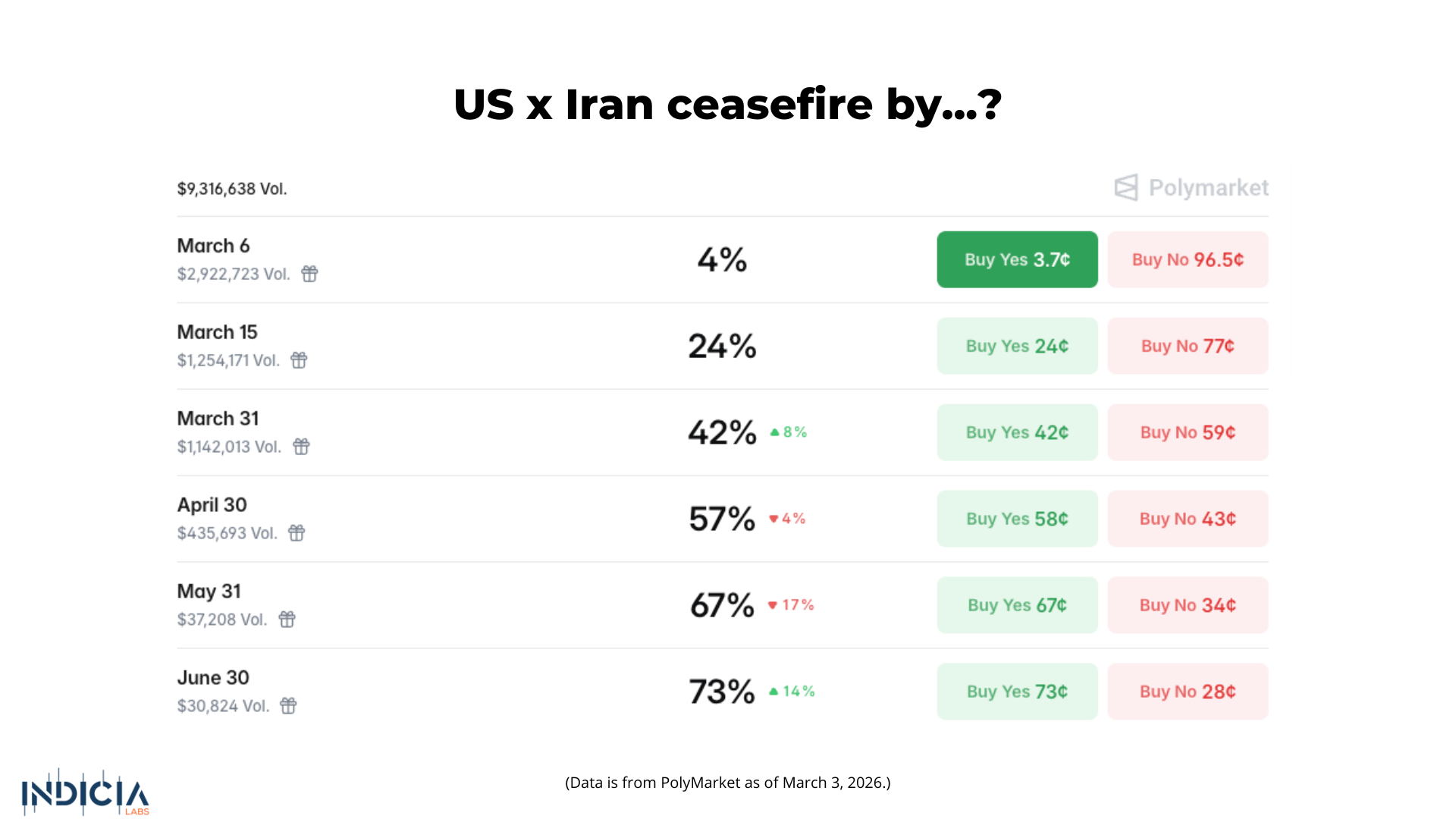
The spillover into broader markets has been immediate. Equity markets fall sharply in response to the Iran war, with the Nasdaq down 2.5% and the S&P 500 off 2.3% at their early morning lows. European markets were hit harder, including a nearly 6% weekly drop in Germany’s DAX. Precious metals, which had run up to all-time highs in the weeks preceding the war, reversed sharply, with gold down 4.3% and silver down 7.5% today.
Bitcoin’s response has been more restrained than prior crisis episodes. Bitcoin touched USD 66,000 earlier in the day, but is trading around USD 68,000, while equities fell more sharply. Year to date, however, Bitcoin has lost nearly a third of its value, and the broader crypto market cap is roughly USD 350 billion lower than a month ago. This middle ground reaction, neither collapse nor decisive rally, is itself meaningful. It reflects uncertainty about whether Bitcoin behaves more like a high beta risk asset or a defensive macro hedge in this phase.
⚖️ Bitcoin's Split Behavior In A Crisis
James Butterfill of CoinShares explained, “Historically, bitcoin, as the only liquid asset that also trades on weekends, has absorbed shocks during periods of forced risk reduction.” Over the weekend, that mechanism was tested again. Butterfill added, “This divergence is significant,” noting that “The absence of significant liquidations despite rising yields and geopolitical tensions suggests that positioning is adjusted compared to previous episodes.” In other words, the leverage driven cascade seen in prior macro shocks did not materialize in the same way.
At the same time, crypto equities did not share Bitcoin’s relative resilience. Shares of Coinbase fell 5%, Robinhood dropped 7%, and Strategy declined 4%, reinforcing that listed crypto proxies still trade like traditional equities under stress. That distinction matters because it separates spot Bitcoin behavior from broader risk appetite. If a true liquidity crunch emerges, history suggests Bitcoin could still be sold as one of the most liquid assets in the system. If inflation fears dominate instead, its fixed supply narrative becomes more relevant.
On-chain data adds another dimension. Reuters reported that “Overall, crypto worth $10.3 million left Iranian crypto exchanges between Saturday and Monday,” according to Chainalysis. Elliptic observed that outflows at Iran’s largest exchange peaked at USD 2.89 million in a single hour, roughly an eightfold increase over the prior day’s peak. Chainalysis cautioned that “Some of these flows are almost certainly ordinary Iranians moving funds in response to rising risk.” That pattern reinforces crypto’s role as a capital mobility tool during regional stress, even if global investors remain divided on its macro classification.
🌐 What The Iran Eescalation Means For Crypto
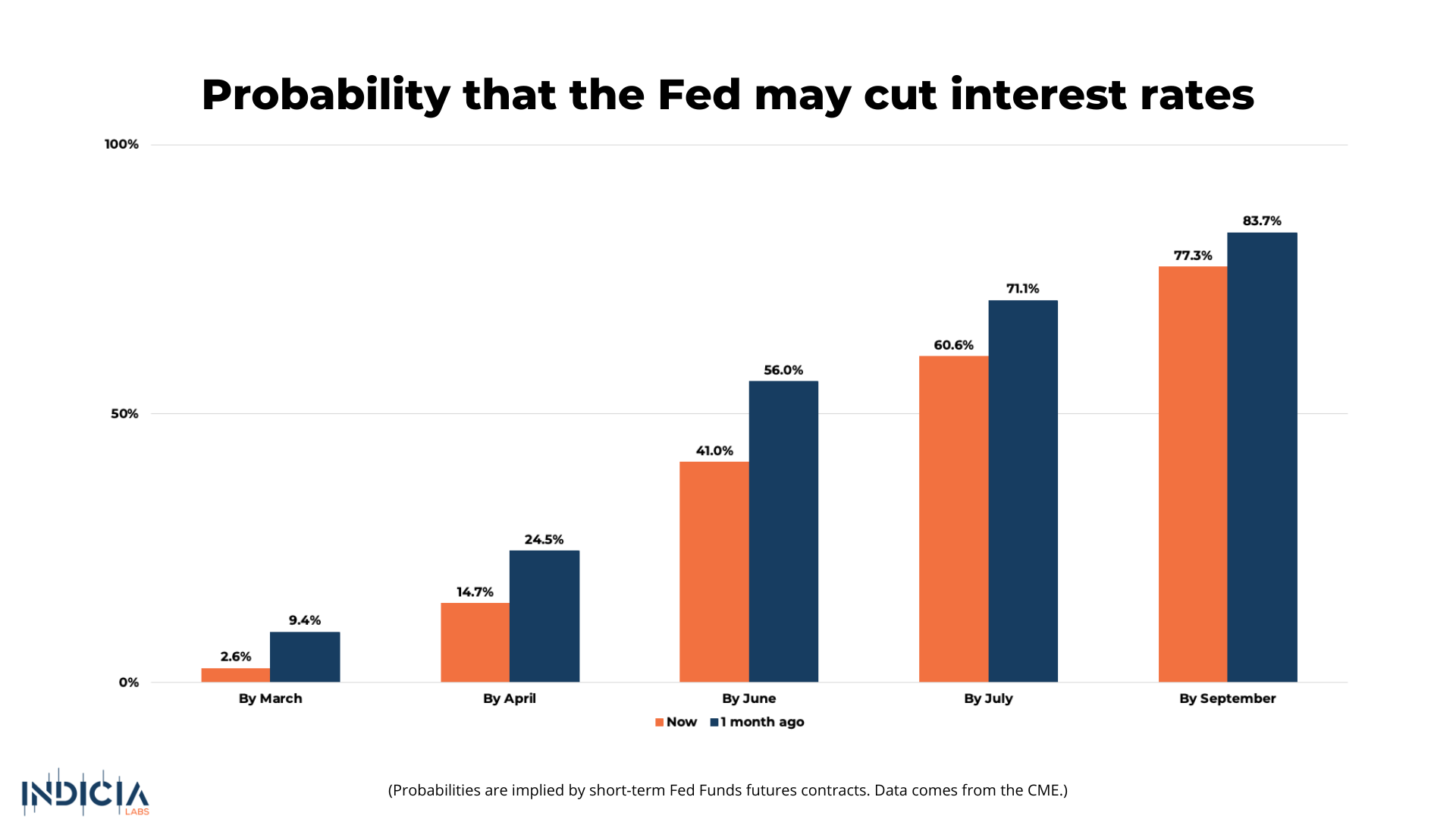
The macro path from here depends heavily on energy. Goldman Sachs estimates a prolonged Hormuz disruption could justify materially higher crude prices, and JP Morgan’s warning about a 25 day storage constraint highlights how quickly supply stress can escalate. If oil pushes toward USD 90 or USD 100 per barrel, inflation expectations could reaccelerate and have already delayed rate cut pricing. That scenario would tighten financial conditions and pressure risk assets, including crypto. The shift is already visible in Fed Funds futures, as shown below, where the probability of rate cuts has moved meaningfully compared to one month ago. Conversely, if the Strait reopens and disruption proves temporary, historical data suggests markets often stabilize within weeks of initial geopolitical shocks.
Bitcoin’s near term test is whether it can hold range while equities remain volatile. CoinDesk described the current move as “a small bit of relative strength,” which is not a breakout but does represent resilience. A sustained period where the S&P 500 weakens further while BTC remains within a 3% to 5% band of recent levels would mark a notable behavioral shift from its historical high beta profile. If instead oil continues higher and BTC fails to respond positively, that would signal liquidity concerns remain dominant.
Ultimately, this conflict is less about missiles and more about liquidity. If energy shocks tighten financial conditions, crypto will trade like a high beta risk asset and feel the pressure first. If instability forces policy easing or reinforces demand for neutral, borderless settlement rails, Bitcoin’s role strengthens over time. The sequence matters, first liquidity stress, then policy response, then narrative shift. What this moment represents is another live macro test of whether crypto remains a speculative extension of risk appetite or begins to solidify as a parallel financial system during geopolitical fracture.
Indicia Labs does not provide investment, tax, or legal advice. You are solely responsible for determining the suitability of any investment, investment strategy, or related transaction based on your personal investment objectives, financial circumstances, and risk tolerance. Indicia Labs may offer educational information about digital assets, which may include blog posts, articles, third-party content, news feeds, tutorials, and videos. This information does not constitute any form of advice, and you should not rely on it as such. Indicia Labs does not recommend buying, earning, selling, or holding any digital asset and will not be responsible for any decisions you make based on the provided information. Any content provided by Indicia Labs may contain errors, inaccuracies, or outdated information and should not be relied upon for making any investment decisions and Indicia Labs and its affiliates hold no responsibility for the accuracy of the provided information or content.
As with any asset, the value of digital assets can fluctuate, and there is a significant risk of losing money when buying, selling, holding, or investing in digital assets. Consult your financial advisor, legal or tax professional regarding your specific situation and financial condition, and carefully consider whether trading or holding digital assets is suitable for you.
Indicia Labs is not registered with the U.S. Securities and Exchange Commission and does not offer securities services in the United States or to U.S. persons. You acknowledge that digital assets are not subject to protections or insurance provided by the Federal Deposit Insurance Corporation or the Securities Investor Protection Corporation.