Sophia’s Thoughts On Tokenization Infrastructure
Several leading institutions have concluded that tokenized real-world assets represent the next structural layer of capital markets. The question is no longer which technology makes this possible, but which institutions control the rails it runs on.
These are Sophia's Thoughts:
Bullish's USD 4.2 billion acquisition of transfer agent Equiniti and DTCC's planned October 2026 tokenization launch signal that institutions are actively building the foundational layer of onchain capital markets right now, not in some distant future.
The infrastructure race is bifurcating: regulated incumbents are acquiring compliance advantages through regulatory licensing and client trust that competitors cannot easily replicate.
With the value of tokenized real-world assets up 66% in 2026 and stablecoin volumes approaching those of Visa and Mastercard combined, the cost of committing capital to the wrong infrastructure rail before competitive dynamics resolve is rising.
🚀 Last week’s market performance
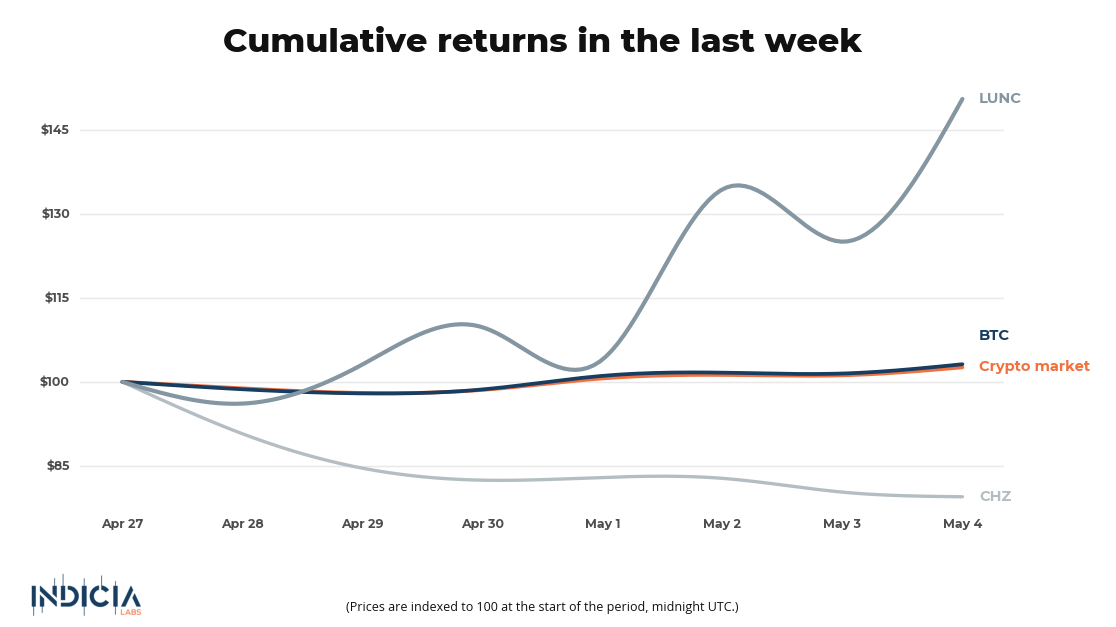
The broader crypto market gained 2.6% over the past seven days, with Bitcoin (BTC) rising 3.1% as sentiment continued to stabilize. Terra Luna Classic (LUNC) was the week's standout performer, surging 50.5% amid a sharp spike in speculative activity around the legacy token. Chiliz (CHZ) was the worst performer, declining 20.5% as momentum faded across the fan token sector.
🧐 What is your crypto mood today?

In each Sophia's Thoughts newsletter, we ask about your crypto mood. Your response to this question helps Sophia get a better sense of the pulse of crypto markets. And this ultimately translates into better insights for you when combined with Sophia's AI models. Your data empowers Sophia to provide you with even better intelligence going forward!
🏗️ The USD 4.2 Billion Bet on Settlement Infrastructure
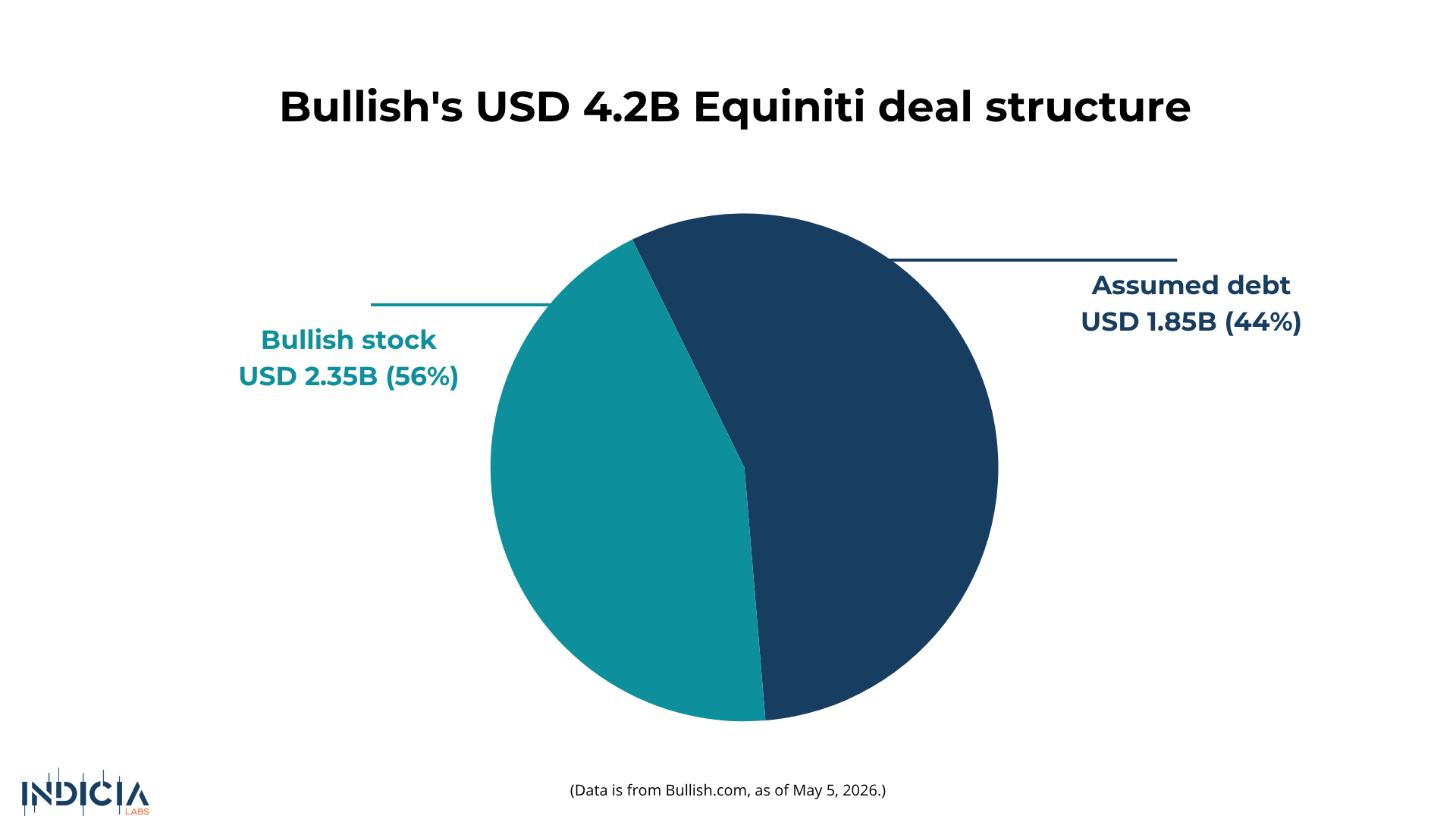
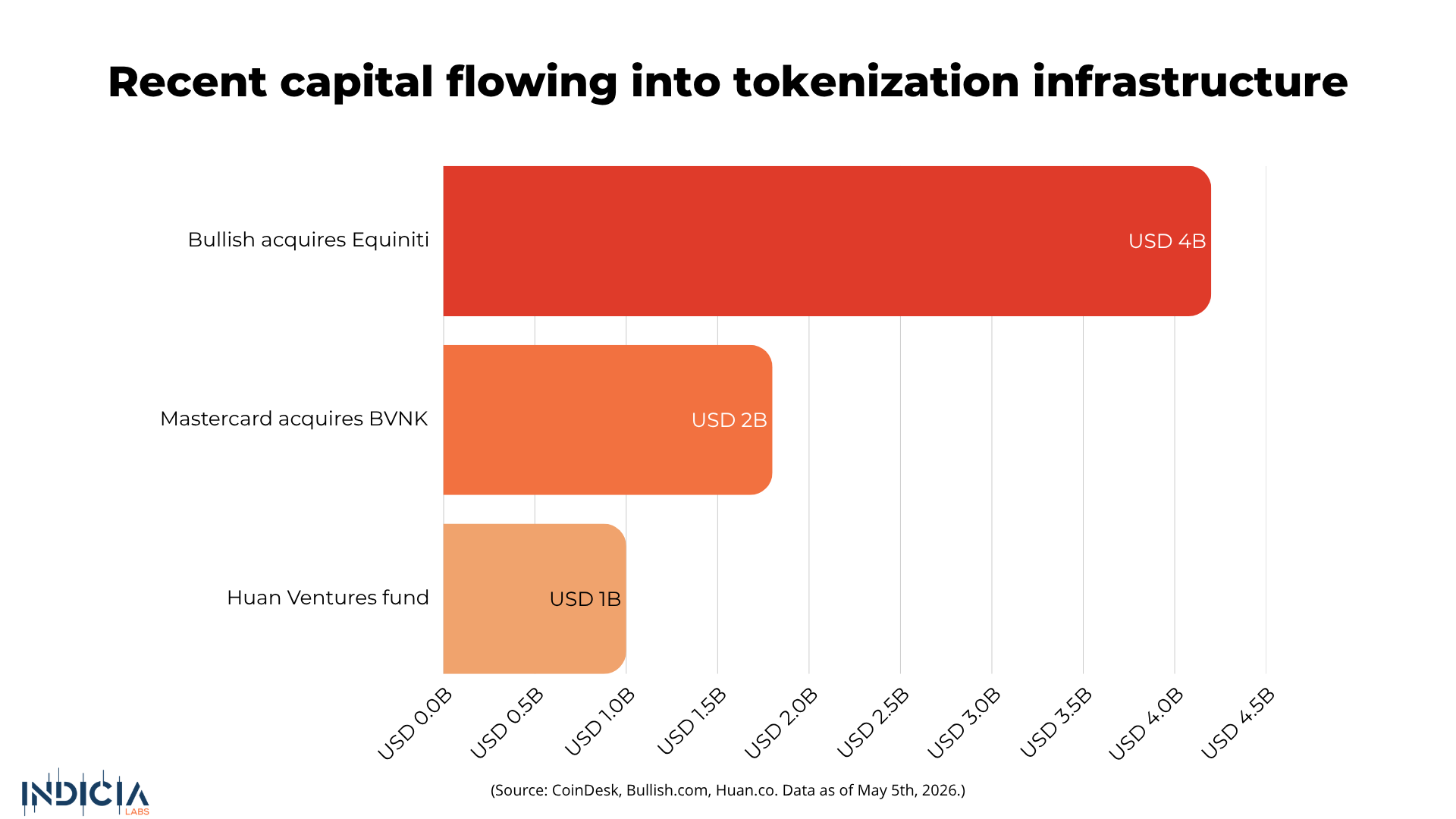
The most consequential tokenization move of the week was not a protocol upgrade or a whitepaper. According to Decrypt, Bullish announced a definitive agreement to acquire Equiniti from private equity firm Siris Capital for USD 4.2 billion, structured as USD 1.85 billion in assumed debt and USD 2.35 billion in Bullish stock. Equiniti functions as a transfer agent, meaning it maintains the official record of who owns shares in a given company. As CoinTelegraph reported, Equiniti currently serves as the system of record for nearly 3,000 blue-chip public companies, including Berkshire Hathaway and Rolls-Royce, and manages relationships with over 20 million verified shareholders.
The strategic logic is straightforward. The combined entity would be positioned to offer 24/7 trading of tokenized securities alongside stablecoin-based payment and settlement tools. Dan Kramer, CEO of Equiniti, described the transaction as one that "strengthens our ability to support clients as markets evolve, while maintaining the stability, service, and trust they expect." Frank Baker, co-founder and managing partner of Siris Capital, framed the exit as consistent with a strategy "of backing tech-enabled services businesses at the center of market transformation." The deal is expected to close in January 2027, pending regulatory approval.
The more serious question the acquisition raises is whether Bullish is buying a genuine bridge between legacy equity infrastructure and onchain settlement, or paying a significant premium for a transfer agent whose core functions may be partially displaced by the very technology it is supposed to support. The competitive advantage here is regulatory positioning and client relationships, not technology. The transaction's value depends entirely on whether regulated tokenized securities trading materializes at scale within the deal's integration timeline.
📋 DTCC Moves From Permission to Production
While Bullish is acquiring legacy rails to retool them, the Depository Trust and Clearing Corporation is moving its existing custody infrastructure directly onchain. As Decrypt reported, DTCC manages roughly USD 114 trillion in custody assets and plans to pilot tokenized real-world asset trading in July 2026, with a full service launch targeted for October 2026. The initiative is backed by an industry working group of more than 50 firms, spanning BlackRock, Goldman Sachs, Bank of America, Citadel Securities, Circle, Coinbase, and Kraken.
Frank La Salla, DTCC President and CEO, stated that "tokenization will significantly change how markets work and operate, bringing new levels of liquidity, transparency and efficiency to investors." Nadine Chakar, DTCC's Managing Director and Global Head of Digital Assets, described the effort as "an important and critical step toward building tomorrow's digital infrastructure." SEC Commissioner Hester Peirce offered measured institutional backing, noting that while "this program is a pilot subject to various operational limitations, it marks a significant incremental step in moving markets onchain." The SEC had already granted pre-approved blockchain access in December, providing a regulatory runway that similar initiatives in Europe and Asia have lacked.
The DTCC's timeline is credible precisely because it is conservative, but execution risk remains the central variable. Coordinating 50-plus institutions across custody, settlement, compliance, and smart contract infrastructure - where financial logic is encoded directly into the settlement mechanism rather than handled by intermediaries - is an undertaking without clean precedent at this scale. Historically, multi-institution financial infrastructure projects of comparable complexity have run 12 to 24 months behind initial projections. The milestones worth watching are whether the July 2026 pilot proceeds with meaningful transaction volume and whether fewer than 10 major institutions complete full migration by Q2 2027; either shortfall would materially challenge the October production thesis.
💸 Where Capital Is Flowing and What It Reveals
The Bullish and DTCC moves do not exist in isolation. As Decrypt reported, Haun Ventures raised a USD 1 billion fund, with tokenized assets and next-generation financial infrastructure listed as two of its three priority areas. Katie Haun, the firm's founder and managing partner, said that "the most dynamic period in technology and finance" she has witnessed is now, and that founders operating in this space "need partners who understand both the technology and the regulatory terrain around it." The fund's previous portfolio exit, BVNK, was acquired by Mastercard for as much as USD 1.8 billion, providing a concrete data point on where strategic acquirers are willing to deploy capital.
From a market structure perspective, the tokenization infrastructure buildout carries implications for public blockchain networks. Stablecoin transaction volumes have surged into the double-digit trillions, approaching the combined volumes of Visa and Mastercard, reflecting genuine settlement demand rather than speculative turnover. The open question for networks such as Solana (SOL) and Ethereum (ETH) is whether regulated tokenization platforms will select blockchains where participation requires approval from a central authority, unlike open public networks, for compliance reasons, effectively routing institutional settlement volume away from permissionless infrastructure.
The base case, for now, is that the tokenization stack will be layered rather than winner-take-all. Incumbents such as DTCC bring regulatory legitimacy and institutional client relationships; crypto-native platforms bring programmability and settlement efficiency. If the two converge through technical bridges that allow different blockchain systems to exchange value and data, the value capture distributes across the stack. If they remain siloed, the platform that controls the compliance layer controls the market. Which outcome prevails will depend less on technology and more on the regulatory and commercial decisions taking shape between now and October 2026, making the DTCC pilot launch date one of the most consequential near-term signals for the entire sector.
Indicia Labs does not provide investment, tax, or legal advice. You are solely responsible for determining the suitability of any investment, investment strategy, or related transaction based on your personal investment objectives, financial circumstances, and risk tolerance. Indicia Labs may offer educational information about digital assets, which may include blog posts, articles, third-party content, news feeds, tutorials, and videos. This information does not constitute any form of advice, and you should not rely on it as such. Indicia Labs does not recommend buying, earning, selling, or holding any digital asset and will not be responsible for any decisions you make based on the provided information. Any content provided by Indicia Labs may contain errors, inaccuracies, or outdated information and should not be relied upon for making any investment decisions and Indicia Labs and its affiliates hold no responsibility for the accuracy of the provided information or content.
As with any asset, the value of digital assets can fluctuate, and there is a significant risk of losing money when buying, selling, holding, or investing in digital assets. Consult your financial advisor, legal or tax professional regarding your specific situation and financial condition, and carefully consider whether trading or holding digital assets is suitable for you.
Indicia Labs is not registered with the U.S. Securities and Exchange Commission and does not offer securities services in the United States or to U.S. persons. You acknowledge that digital assets are not subject to protections or insurance provided by the Federal Deposit Insurance Corporation or the Securities Investor Protection Corporation.